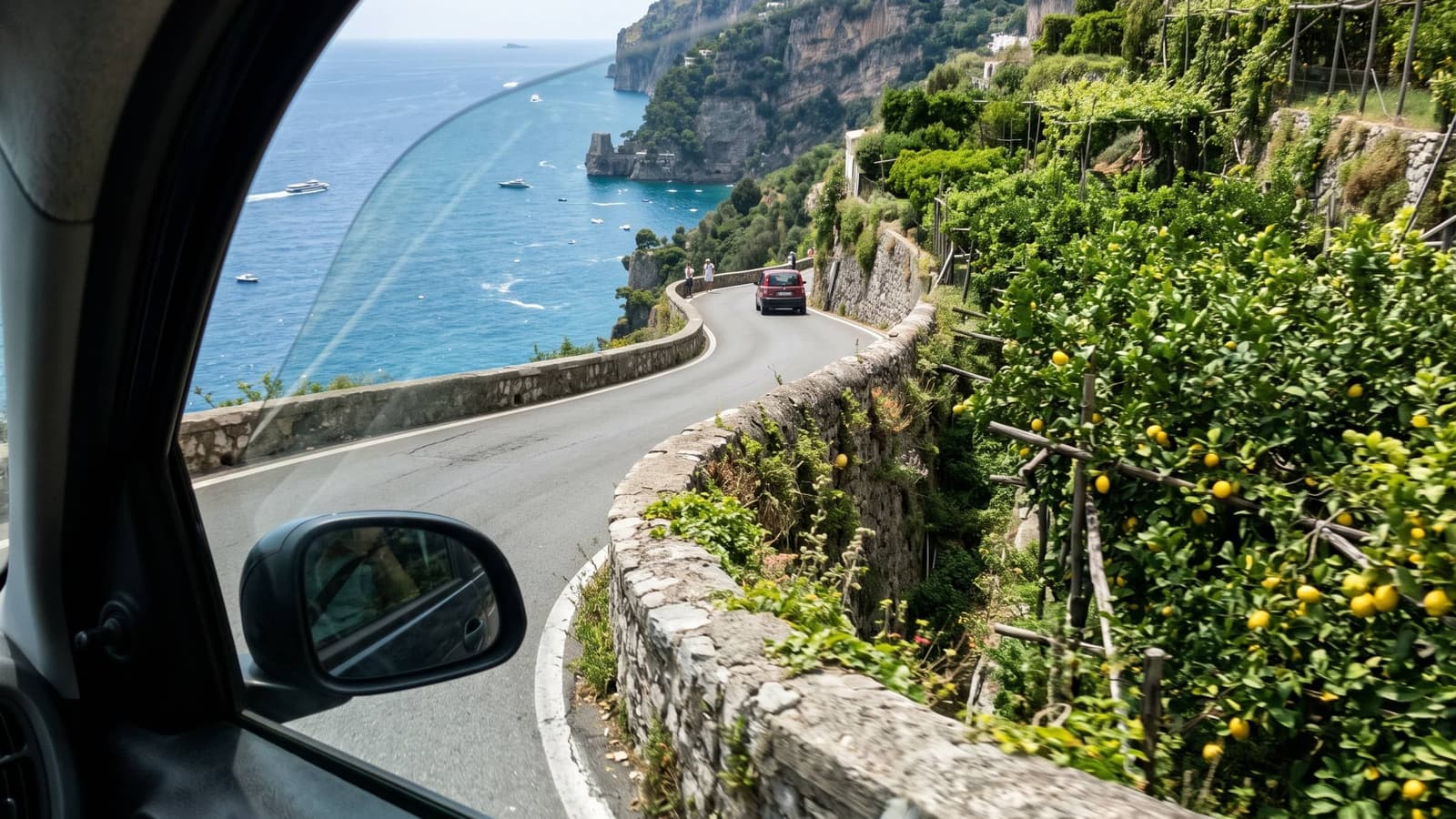
I have hundreds of photos sitting in Google Photos that nobody will ever see.
Good ones, too. Sunrises I got up at 5am for. Street corners that smelled like rain and grilled fish. Friends squinting into the light on a beach whose name I’d have to look up. They’re all there, perfectly backed up, perfectly organized by date — and completely invisible. Nobody scrolls back. Not even me.
And the route itself was disappearing. After a big backpacking trip you think you’ll remember the way you went — you won’t. A few years on, all I had of 2015 was a handful of stars scattered across Google Maps: a mess of pins with no order, no line between them, no story. Which town came after which? Where did we cross the border? I genuinely couldn’t tell you. It felt like losing the trip twice.
That’s the frustration Afterglow comes from. Not that my photos were lost — they were ignored. And every tool I tried to fix it with wanted something I couldn’t give it. Some wanted me to have tracked the trip live, from day one, like I’d known in advance this trip would matter. Others wanted an evening of my life dragging photos into boxes. My trips were already over. The photos already existed. Why was reliving a journey harder than taking it?
So we built the tool I wanted: you drop in the photos, and that’s basically it. Afterglow reads the time and place your camera already saved in every shot, rebuilds the route, and turns the pile into something you can actually relive — a journey on a globe, a story, a link you can send to your mum, a book you can put on a shelf. The first time it rebuilt my 2015 trip I just sat there grinning at the map: oh yeah — THIS is where I went. That’s what I did. That feeling is the product.
It usually takes about a minute to see your trip again. Not a weekend. A minute. And when you share it, people don’t just get a pile of pictures — they see the actual route you took, drawn on the map, stop by stop.
Afterglow is built by travelers, for travelers. Which mostly means one thing: we refuse to make you do work a machine can do. Every click we can remove, we remove. Where AI genuinely helps — writing your story in your own words, sharpening an old photo until it can be printed — it’s built in. Where it doesn’t, it isn’t.
And because we want people to actually use this — not admire the pricing page and leave — we keep prices as low as we can. There’s a real free plan, and the paid things cost what they cost because printing and computing cost money, not because a spreadsheet said travelers would tolerate more.
Your best days shouldn’t live in a folder nobody opens. That’s the whole idea.
— the founder of Afterglow